Choosing between Invisalign and braces can feel confusing, especially when both treatments promise straighter teeth and a better smile.
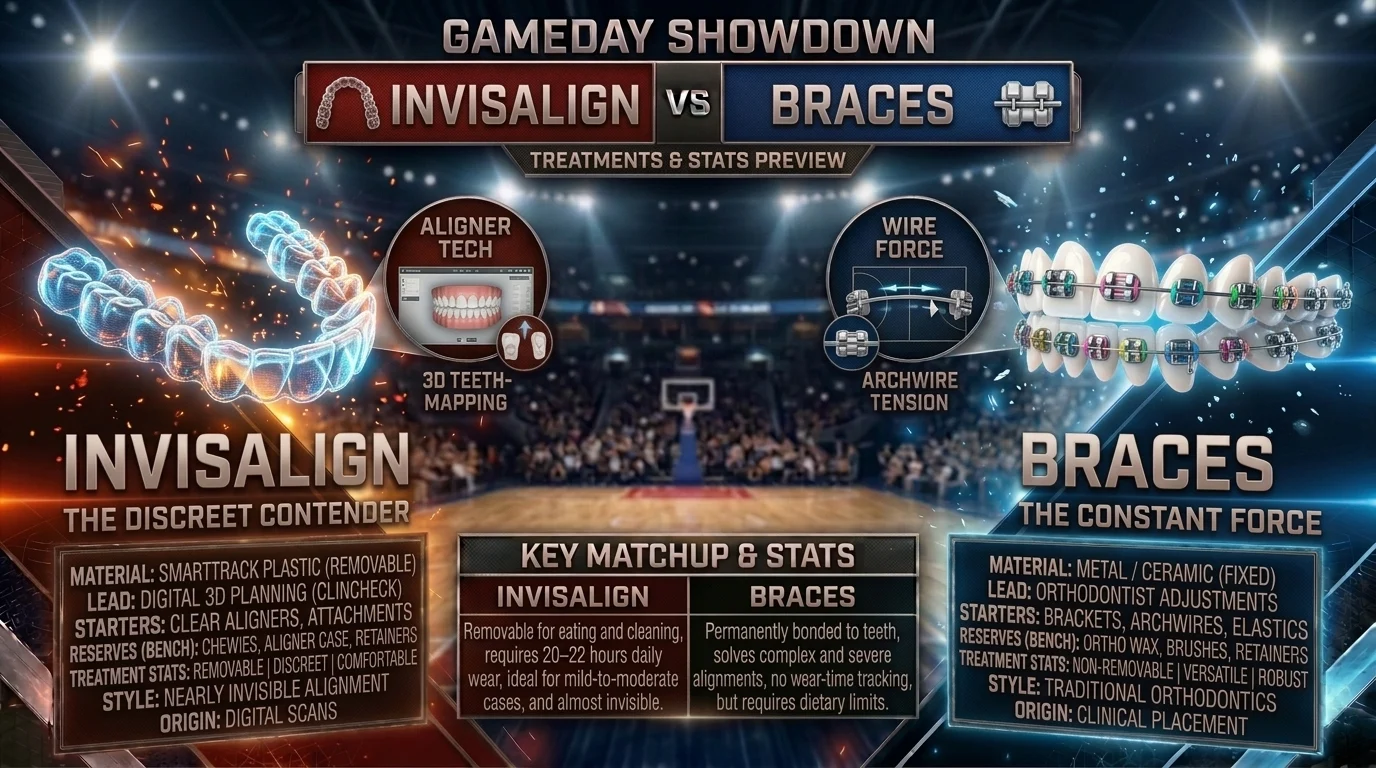
Invisalign uses clear, removable plastic aligners, while traditional braces use brackets and wires attached to your teeth.
Both treatments gradually move teeth into better positions, but they differ in appearance, daily care, comfort, and suitability for different orthodontic problems.
The right choice depends on your dental condition, lifestyle, budget, and ability to follow your treatment plan.
Invisalign may appeal to adults and teenagers who prefer a discreet option, while braces can be suitable for a wide range of alignment and bite problems.
Neither treatment is automatically faster, cheaper, or more effective for everyone.
Understanding their main differences can help you make a confident decision with your orthodontist and prepare for the treatment process.
Quick Answer: Invisalign vs Braces
Invisalign is best for people who want a clear, removable teeth-straightening option, while braces may be preferable for certain complex orthodontic problems. Both can straighten teeth effectively when properly planned and monitored. Your orthodontist can recommend the most appropriate treatment based on your bite, tooth alignment, lifestyle, and treatment goals.
Why Do People Confuse Invisalign and Braces?
People often compare Invisalign and braces because both treatments correct crooked teeth, crowding, gaps, and certain bite problems. Their purpose is similar, but their designs and daily requirements are different.
Invisalign uses removable aligners that must be worn consistently. Traditional braces remain attached to the teeth throughout treatment and are adjusted by an orthodontist.
The main differences involve:
- Appearance: Clear aligners are less noticeable than traditional metal braces.
- Removability: Invisalign can be removed; fixed braces cannot.
- Eating: Aligners are removed before meals, while braces require some food restrictions.
- Cleaning: Removable aligners make brushing and flossing easier.
- Treatment suitability: Both can treat many orthodontic problems, but the best option depends on the specific case.
- Daily responsibility: Invisalign requires consistent wear, while braces remain in place.
First Word: What Is Invisalign?

Invisalign is a branded orthodontic treatment that uses custom-made transparent plastic trays to move teeth gradually. Each set of aligners is designed to make small changes to tooth position according to a treatment plan created by a dental professional.
How Invisalign works
- An orthodontist examines your teeth and bite.
- Digital scans or other dental records are taken.
- A personalized treatment plan is developed.
- You receive a series of clear aligners.
- You change aligners according to your provider’s instructions.
- Your orthodontist monitors progress and makes adjustments when necessary.
Aligners are generally worn for around 20–22 hours per day, although your orthodontist will give you specific instructions. You remove them for eating, drinking beverages other than water, and cleaning your teeth.
Benefits of Invisalign
- Clear appearance that is relatively discreet.
- Removable design for meals and dental hygiene.
- No fixed metal brackets or wires.
- Easier brushing and flossing without an appliance attached to the teeth.
- Fewer food restrictions related to orthodontic hardware.
Disadvantages of Invisalign
- Requires discipline to wear aligners for the prescribed hours.
- Aligners can be lost, damaged, or forgotten.
- Some tooth movements require attachments or additional techniques.
- You must remove aligners for meals and most drinks.
- It may not be suitable for every complex bite or alignment problem.
Second Word: What Are Braces?

Braces are orthodontic appliances that use brackets and wires to move teeth gradually. The brackets are attached to the teeth, and an archwire applies controlled forces that guide tooth movement over time.
Traditional metal braces are widely recognized, but other options include ceramic braces, which use tooth-colored or less noticeable brackets.
How braces work
- An orthodontist assesses your teeth and bite.
- Brackets are attached to your teeth.
- An archwire connects the brackets.
- The appliance applies controlled pressure to move teeth.
- The orthodontist checks your progress and adjusts the braces.
- Once treatment is complete, retainers help maintain your results.
Benefits of braces
- Suitable for a broad range of orthodontic problems.
- Remain attached, so there is no need to remember to put them back in.
- Allow precise control over many tooth movements.
- Cannot be misplaced like removable aligners.
- Ceramic options offer a less noticeable alternative to metal brackets.
Disadvantages of braces
- Traditional metal braces are visible.
- Brackets and wires may irritate the cheeks and lips.
- Hard, sticky, and chewy foods may damage the appliance.
- Brushing and flossing require additional care.
- Broken brackets or wires may require an extra appointment.
Invisalign vs Braces: Comparison Table
| Feature | Invisalign | Traditional braces |
|---|---|---|
| Appearance | Clear and discreet | Metal brackets are visible |
| Removable | Yes | No |
| Eating | Remove before meals | Avoid certain hard and sticky foods |
| Oral hygiene | Easier without aligners in | Requires careful cleaning around brackets |
| Comfort | May cause pressure or soreness | May cause soreness and mouth irritation |
| Daily responsibility | Requires consistent wear | Remains attached to teeth |
| Complex cases | Suitable for many cases | Suitable for a wide range of cases |
| Cost | Depends on treatment needs and provider | Depends on appliance and treatment needs |
| Treatment duration | Varies by case and compliance | Varies by case and complexity |
| Follow-up | Regular orthodontic checks | Regular checks and adjustments |
| Retainers afterward | Usually required | Usually required |
Neither option is universally better. Your orthodontist should recommend treatment based on your dental condition and the movements required to achieve the desired result.
When Should You Choose Invisalign or Braces?
When Invisalign may be the better choice
Invisalign may suit you if:
- You prefer a discreet orthodontic treatment.
- You want to remove your appliance while eating.
- You can consistently wear aligners for the required hours.
- You want to brush and floss without fixed brackets.
- Your orthodontist confirms that aligners can address your dental needs.
When braces may be the better choice
Braces may suit you if:
- You need tooth movements that are better managed with fixed appliances.
- You do not want to keep track of removable aligners.
- You have a complex alignment or bite problem.
- You are concerned about losing or forgetting aligners.
- You prefer an appliance that stays attached throughout treatment.
Your orthodontist may also discuss ceramic braces or other treatment options. Ask about expected results, treatment duration, total cost, and any limitations before making your decision.
10 Examples: Invisalign vs Braces in Everyday Life
These examples show how personal circumstances can influence your choice.
- An adult who meets clients regularly: Invisalign may appeal because clear aligners are less noticeable than metal braces.
- A teenager who frequently forgets things: Braces may be more practical because the appliance cannot be left out after meals.
- Someone who enjoys crunchy snacks: Invisalign allows you to remove the aligners before eating, while hard foods may damage braces.
- A person with crowded teeth: Either option may work, depending on the severity of crowding.
- Someone with a complex bite problem: Braces may be recommended, although some complex cases can be treated with aligners.
- A frequent traveler: Both treatments can work, but each requires planning for follow-up appointments and treatment instructions.
- Someone who struggles with flossing: Invisalign makes conventional flossing easier when the aligners are removed.
- A musician who plays a wind instrument: Removable aligners may be convenient, but the wearer must still meet daily wear requirements.
- A person on a limited budget: Compare personalized quotes rather than assuming either treatment is always cheaper.
- Someone hoping for quick results: Ask an orthodontist for a realistic timeline based on the complexity of your case.
- A person who plays contact sports: Either option may be possible, but ask your orthodontist about a suitable mouthguard and sport-specific precautions.
Common Mistakes When Comparing Invisalign and Braces
Avoid these common misunderstandings when choosing orthodontic treatment:
- Assuming Invisalign works for everyone: Some cases are better treated with fixed braces or another approach.
- Believing braces are always painful: Both treatments can cause temporary soreness or pressure.
- Wearing Invisalign only at night: Most treatment plans require around 20–22 hours of daily wear.
- Assuming braces are always cheaper: Prices vary according to the provider, location, treatment complexity, and duration.
- Ignoring oral hygiene: Both options require regular brushing, flossing, and professional dental care.
- Expecting permanent results without retainers: Teeth can shift after either treatment.
- Choosing based only on appearance: Your bite and the tooth movements needed are just as important.
- Expecting identical treatment times: Duration depends on your individual needs and how well you follow the plan.
Memory Trick: Invisalign vs Braces
Remember this simple rule:
- Invisalign = Clear and removable.
- Braces = Fixed brackets and wires.
Also remember two important points:
- Invisalign requires consistent daily wear.
- Both treatments usually require retainers afterward.
This quick comparison helps you recall the main differences without assuming that one option is best for every person.
American vs British English: Orthodontic Terms
American and British English share most orthodontic terminology, although some spellings differ.
| American English | British English | Meaning |
|---|---|---|
| Orthodontist | Orthodontist | Dental specialist who treats alignment problems |
| Orthodontics | Orthodontics | Field focused on tooth and bite alignment |
| Anesthesia | Anaesthesia | Medication used to prevent or reduce pain |
| Center | Centre | Different spelling of the same word |
| Retainer | Retainer | Appliance used to help keep teeth in position |
In both countries, Invisalign refers to a branded clear-aligner system, while braces generally refers to fixed orthodontic appliances.
Similar Terms You Should Know
Understanding related dental terms can help you discuss treatment options with your orthodontist.
- Clear aligners: Removable transparent trays that gradually move teeth.
- Metal braces: Fixed orthodontic appliances with metal brackets and wires.
- Ceramic braces: Fixed braces with tooth-colored or less noticeable brackets.
- Lingual braces: Braces attached to the inside surfaces of the teeth.
- Orthodontist: A dental specialist trained to diagnose and treat tooth and bite alignment problems.
- Retainer: An appliance used after orthodontic treatment to help prevent teeth from shifting.
- Malocclusion: A problem with how the upper and lower teeth fit together.
- Overbite: The vertical overlap of the upper front teeth over the lower front teeth; excessive overlap may require treatment.
Final Verdict: Is Invisalign Better Than Braces?
Invisalign may be the right choice if you want a discreet, removable appliance and can follow the daily wear requirements. Braces may be preferable if your orthodontist recommends fixed appliances for your particular tooth movements or bite problem.
Both treatments can produce excellent results when properly planned and monitored. The best option depends on your dental condition, lifestyle, budget, treatment goals, and ability to follow instructions. Rather than choosing based on appearance alone, ask your orthodontist to compare the expected results, treatment duration, total cost, and retention requirements for both options.
Frequently Asked Questions
1. Is Invisalign better than braces?
Neither is universally better. Invisalign offers a discreet, removable option, while braces can treat a wide range of orthodontic problems. Your dental needs and orthodontist’s assessment determine which is more suitable.
2. Is Invisalign faster than braces?
Not always. Treatment time depends on the complexity of tooth movements, your treatment plan, and how consistently you wear aligners. Your orthodontist can estimate the likely duration for your case.
3. Is Invisalign more expensive than braces?
Costs vary by location, provider, treatment complexity, and duration. Invisalign and braces can have comparable costs in some cases. Request a personalized quote that includes appointments, retainers, and possible additional procedures.
4. Which is more painful, Invisalign or braces?
Both can cause temporary pressure or soreness as teeth move. Braces may also irritate the cheeks and lips, while new aligners can cause pressure when you begin wearing them. Experiences vary.
5. Can Invisalign fix severe crowding?
Invisalign can treat many crowding problems, including some complex cases. However, not every case is suitable for aligners alone. An orthodontist must evaluate your teeth and bite before recommending treatment.
6. Can I eat normally with Invisalign?
You generally remove Invisalign aligners before eating, so you do not have the same bracket-related food restrictions as people with braces. Remove aligners for drinks other than water as directed, and clean your teeth before putting them back in.
7. Do I need a retainer after Invisalign or braces?
Usually, yes. Teeth can move after either treatment. Your orthodontist will recommend a retainer and explain how often and how long to wear it to maintain your results.
Remember This
- Invisalign: Clear, removable, and dependent on consistent wear.
- Braces: Fixed, available in different styles, and suitable for a wide range of orthodontic problems.
- Both: Require professional monitoring, good oral hygiene, and usually retainers afterward.
The right treatment is the one that safely meets your dental needs and fits your daily routine.
Conclusion
Invisalign and traditional braces can both help straighten teeth, improve alignment, and address certain bite problems. Invisalign stands out for its clear appearance and removability, while braces offer a fixed treatment option that provides precise control over many tooth movements. Comfort, cost, and treatment time vary from person to person, so choosing based on appearance alone is not enough.
Before deciding, schedule an orthodontic consultation and ask about expected results, treatment duration, total cost, and retainer requirements. Your orthodontist can assess your individual needs and explain which approach is most appropriate. With a suitable treatment plan, consistent care, and proper follow-up, either option may help you achieve a straighter, healthier smile.

I’m Cody Wells, a passionate writer who loves creating heartfelt wishes, greetings, and messages. I enjoy helping people find the perfect words for every special moment.